
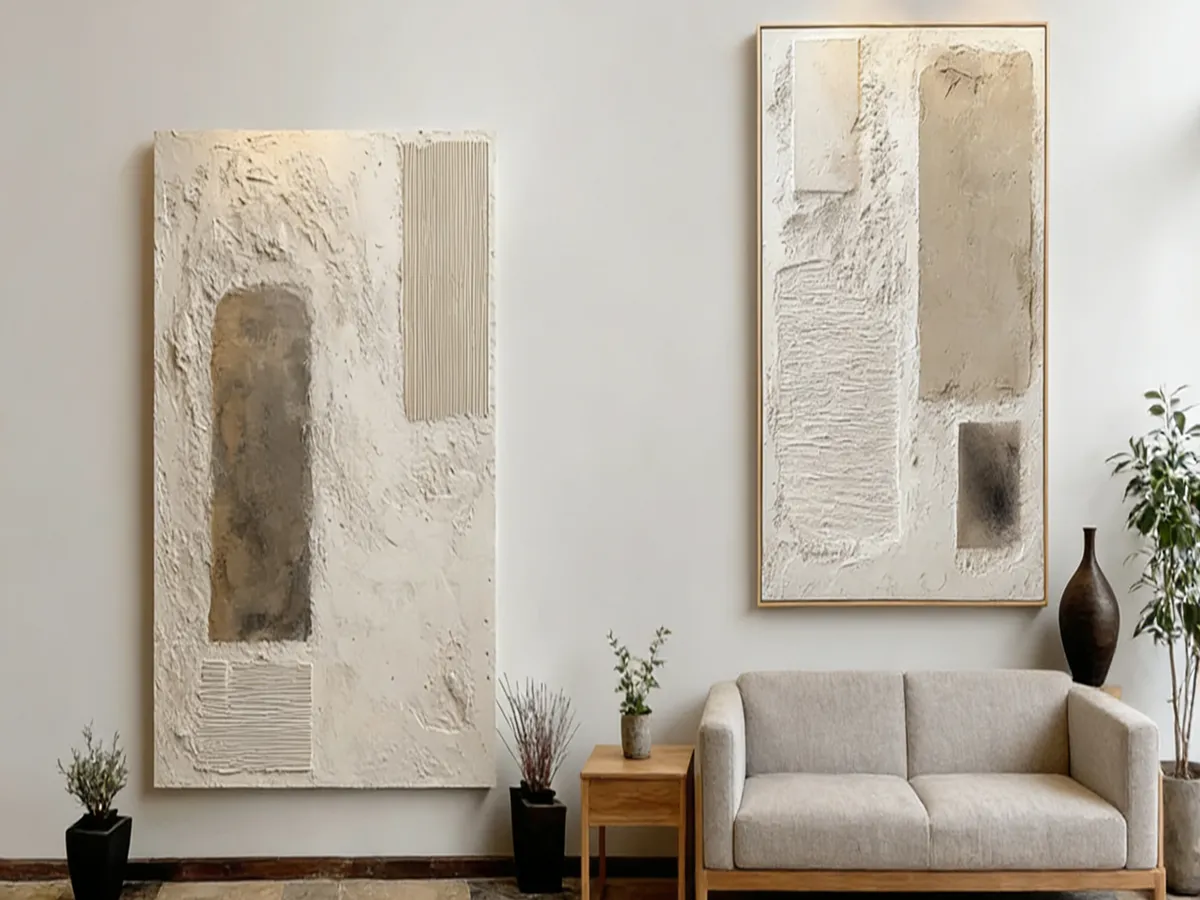
In a world of high-definition screens and glossy finishes, the eye craves rest. This is why Wabi-Sabi—the Japanese philosophy of finding beauty in imperfection—has captivated the design world. It is not just a trend; it is a return to authenticity. When applied to wall decor, Plaster Texture Paintings embody this spirit perfectly. With their raw surfaces, organic cracks, and matte finishes, these hand-painted oil artworks bring a sense of history and calm to modern homes, bridging the gap between Nordic Minimalism and organic warmth.
Why Plaster Texture? The Death of the Flat Wall
Why choose a textured painting over a standard print? The answer lies in Depth.
A flat print looks the same from every angle. However, a Wabi-Sabi plaster painting is a living object. Our artists use heavy impasto techniques and mixed media (like sand or plaster paste) to build physical ridges on the canvas. As the sun moves across your room, these ridges cast micro-shadows that change throughout the day. This dynamic interplay of light and shadow turns a simple Minimalist wall into a sculptural experience, adding visual weight that anchors the room.
Styling Tip 1: Master the Lighting
The most "valuable" advice for decorating with texture is this: Lighting is everything.
To truly unlock the beauty of a 3D textured oil painting, avoid harsh, direct frontal light, which flattens the details. Instead, use "raking light"—light that washes across the surface from above or the side. A simple wall sconce or a nearby window can highlight the peaks and valleys of the plaster, dramatizing the Wabi-sabi aesthetic. This simple tweak transforms the artwork from "decoration" to a "masterpiece."
Styling Tip 2: The Art of Material Contrast
Wabi-Sabi thrives on the contrast between "refined" and "raw."
Soft vs. Hard: Pair the rough, matte finish of a Nordic textured canvas with soft materials. Place it near a linen sofa, a wool rug, or velvet cushions. The roughness of the art makes the soft furnishings feel even cozier.
Organic Elements: Enhance the authenticity of the artwork by placing natural objects nearby—a dried branch in a ceramic vase, a wooden stool, or a stone bowl. These organic elements echo the hand-painted nature of the art, creating a cohesive sanctuary.
Styling Tip 3: Embrace Asymmetry
Perfection is the enemy of Wabi-Sabi. When hanging your art, resist the urge to measure everything to the millimeter for perfect symmetry.
Try an off-center placement. Hang a large textured abstract painting slightly to the left above a console table, and balance the right side with a tall lamp or plant. This asymmetrical layout feels more relaxed, curated, and inherently modern. It invites the eye to travel across the space rather than getting stuck in the middle.
Final Thoughts: An Investment in Calm
Decorating with Wabi-Sabi plaster texture paintings is not about impressing guests with flashiness; it is about creating a space that holds you. It is about choosing 100% hand-painted oil paintings that carry the energy of the artist's hand over mass-produced sterility. Whether you live in a sleek urban apartment or a cozy country house, introducing texture to your walls is the simplest way to bring silence, depth, and timeless elegance into your daily life.
 English